Power
Existing engines + marine gensets provide power with N+1 redundancy

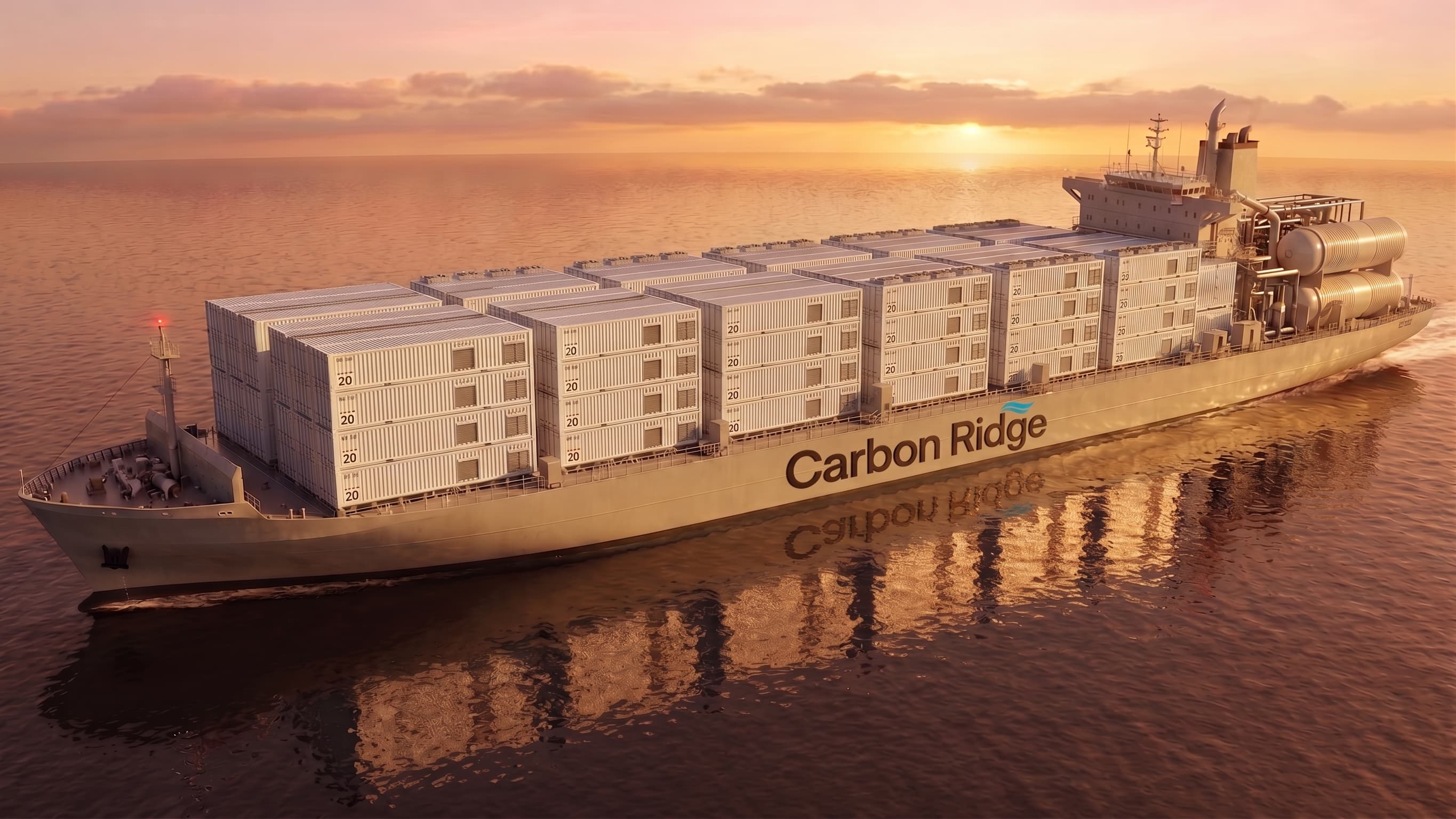
Carbon Ridge turns ships into floating data centers, delivering power and cooling directly from the vessel's existing power plant.
We bring compute to where the resources exist today — unblocking the growing constraints of terrestrial data centers and dramatically accelerating time-to-power.
Existing engines + marine gensets provide power with N+1 redundancy
Closed-loop, seawater based cooling (PUE 1.10-1.15)
Streamline certification within maritime class, flag & MARPOL approvals
99% NOx & SOx + 90% CO2 reduced by proprietary emissions treatment module
We decouple the engine shaft and shaft-driven generators to produce variable frequency alternating current that is rectified onto a direct current link, flows through a sectionalized voltage bus, and steps down immediately adjacent to the uninterruptible power supply and compute.
Layered backup comes from a redundant auxiliary generator plant sized to carry the full compute load (N+1 redundancy) on its own and a standards-based interface for shore or marine supplied external power enabling future potential for interconnection. No single power path is ever critical.
Cooling is completed with direct-to-chip cooling via CDUs on closed freshwater loops, followed by our proprietary two-stage primary cooling architecture: heat rejection via an intermediary closed freshwater loop, followed by a final open-loop seawater process, with no chillers anywhere in the chain, yielding a power usage effectiveness (PUE) of 1.10 to 1.15.
N+1 redundancy is supplied across pumps, exchangers, and CDUs. Zero municipal water is used onboard.
Primary connectivity is provided via co-located subsea fiber terminated onboard at 800Gbe, delivering 0.1ms RTT latency. Bonded 100Gbps free-space optical links serve as secondary connectivity, enabling 0.5ms RTT latency.
LEO / GEO satellite provides triple redundancy and satellite preserves command, telemetry, and management traffic through any primary outage. The composite of two or more independent paths is engineered to 99.99%+ availability, under one hour of communications downtime per year.
Partner & customer supplied racks, and compute hardware sit in patent-pending pre-fabricated marine-grade containerized modules.
Modules consist of isolation mounts tuned for machinery vibration and roll/heave/pitch, seismic-grade bracing, chloride protection, marine fire suppression, and layered EMI defense. Carbon Ridge works with our customers on integration of customer-furnished compute infrastructure with our marine-grade modules.
The vessel becomes the land. Land entitlement, air permitting & community reviews are replaced by centralized vessel classification processes through Classification Society, Flag State, and regional bodies such as USCG. Streamlined processes standardized in the marine & offshore industry.
Proprietary emissions treatment removes 99% of SOx, NOx, and PM, and CO₂ capture modules reduce up to 90% CO₂ at <10% total parasitic load. CO₂ is liquefied and stored in Type-C deck tanks; Carbon Ridge and our partners ensure offloading and permanent sequestration and in the US, monetization of the Section 45(q) tax credit ($85/ton).
Net: ~70–80 kg CO₂/MWh, versus ~400 kg CO₂/MWh for land-based combined cycle gas and 600 kg CO₂/MWh for simple-cycle peakers, an 80 to 90% reduction against comparable land-based generation.
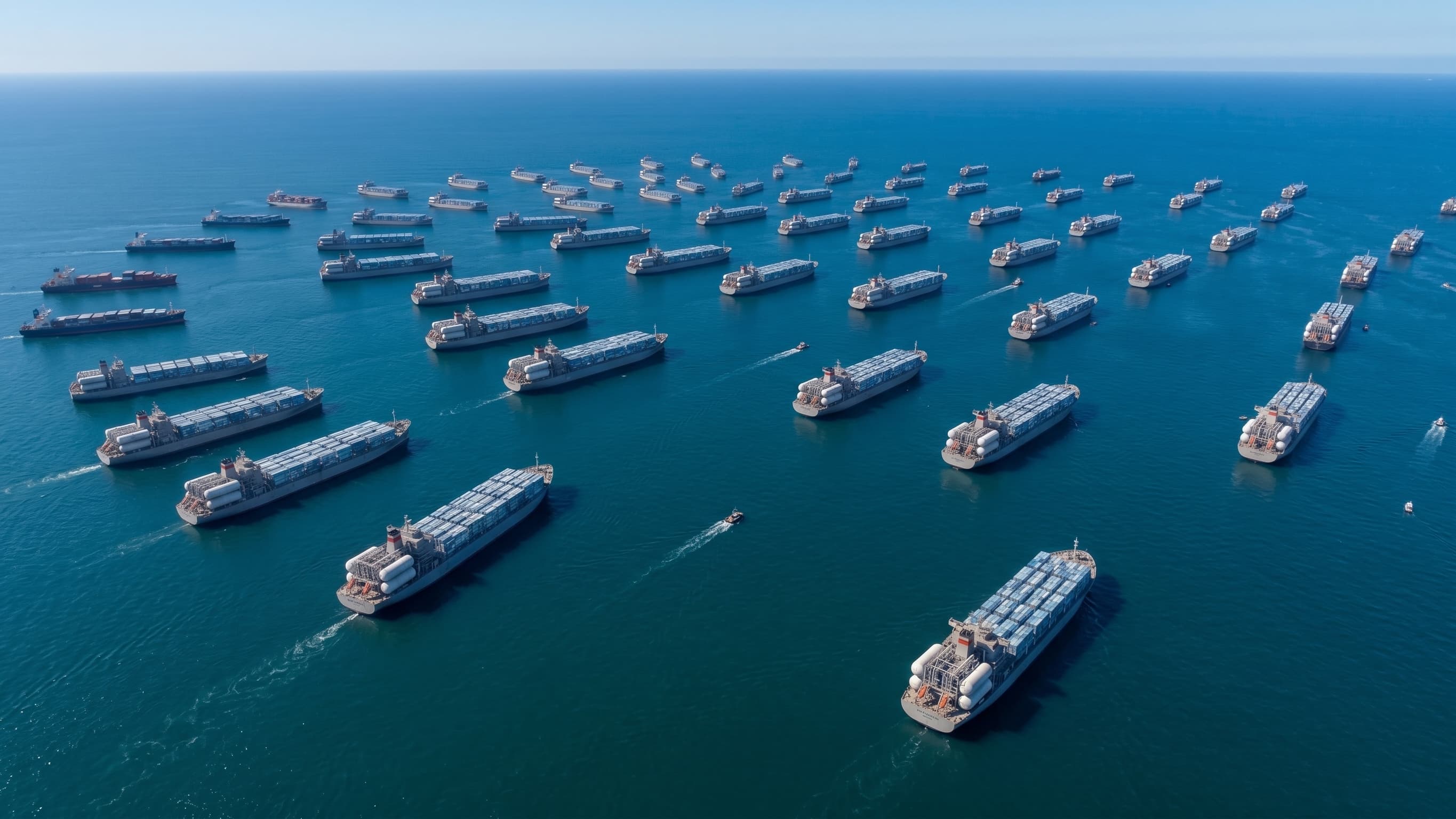
Deployable in gigawatt-scale clusters
AMERICAS